Play
Dine
Rest
OSBOURNE HOUSE
The experience of living history.
Osbourne House is Fitzroy's oldest remaining residence. A manor built in 1851 that became a boarding house in 1888 and has remained one ever since. When our client purchased the building in a state of disrepair, they entrusted us with breathing new life into it, reactivating it for accommodation and carrying that remarkable legacy forward into the future.
The Brief.
Heritage projects demand a particular kind of patience and curiosity. Before a single design decision was made, we committed to truly understanding Osbourne House, its layers of history, its scars, and its bones. We interviewed Peter Elliott, the architect who worked on the building from the 1970s through to the 1990s, visited the RMIT Design Archive to study original drawings and photographs, and commissioned detailed LiDAR scanning of both the interior and exterior to document every corner of the existing conditions in extraordinary detail.
Working closely with Bryce Raworth Heritage Consultants and Heritage Victoria, we ensured every decision was grounded in deep respect for the building's protected status and its place in Fitzroy's story.
This is an ongoing project. Like all heritage work, it has presented challenges that no amount of planning can fully anticipate, from evolving conditions on site to the realities of maintaining a building that has faced years of neglect, ongoing break-ins and vandalism. We have navigated each of these challenges step by step, in close partnership with our client throughout.
Project Highlights.
A Palette That Belongs
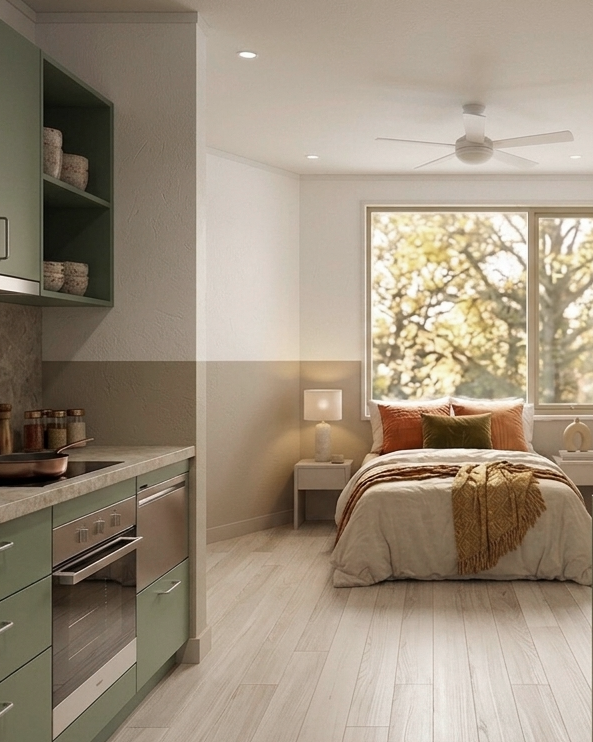
Osbourne House has sheltered many kinds of people across its 175-year life. Built as a private manor, it became a boarding house in 1888 and has housed residents ever since, its walls carrying the stories of generations of people who called it home, often during transient or difficult chapters of their lives.
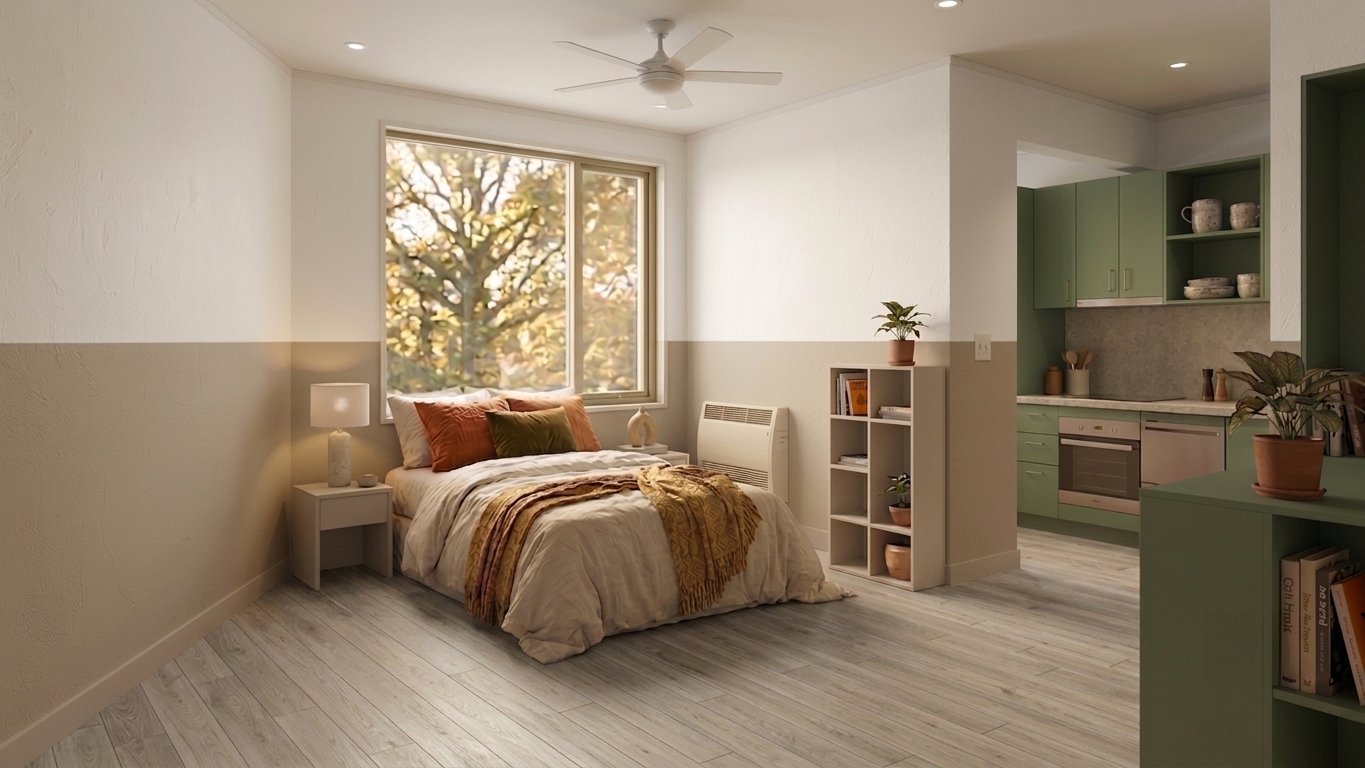
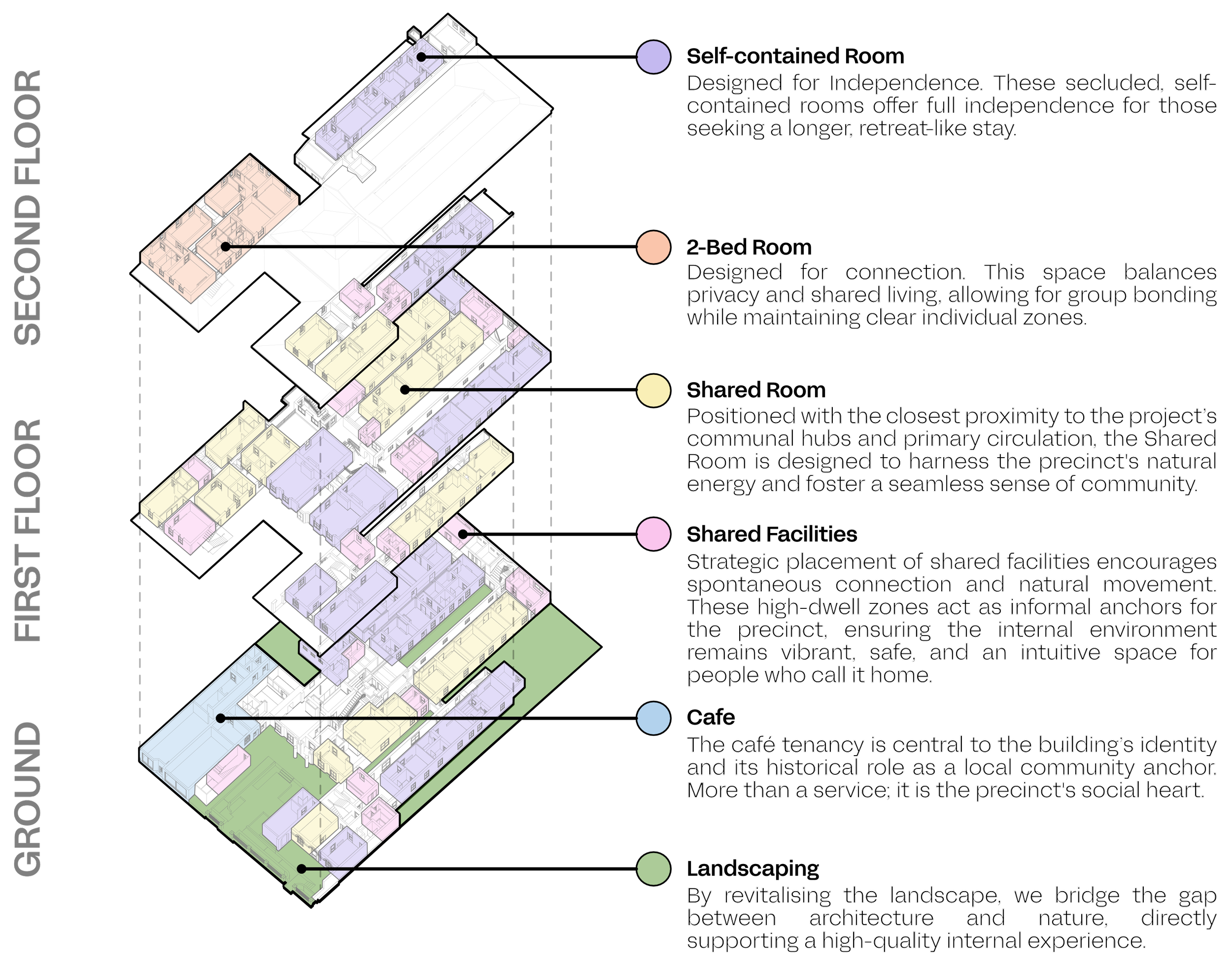
That history sits at the heart of our design decisions. Internally, the design is centred on the people who will call it home. A heritage sympathetic colour and material palette creates warmth and comfort without erasure, while communal and shared living spaces are designed to foster a genuine sense of community and belonging, continuing the spirit of collective living that has defined this building for over 130 years.
Uncovering the Original
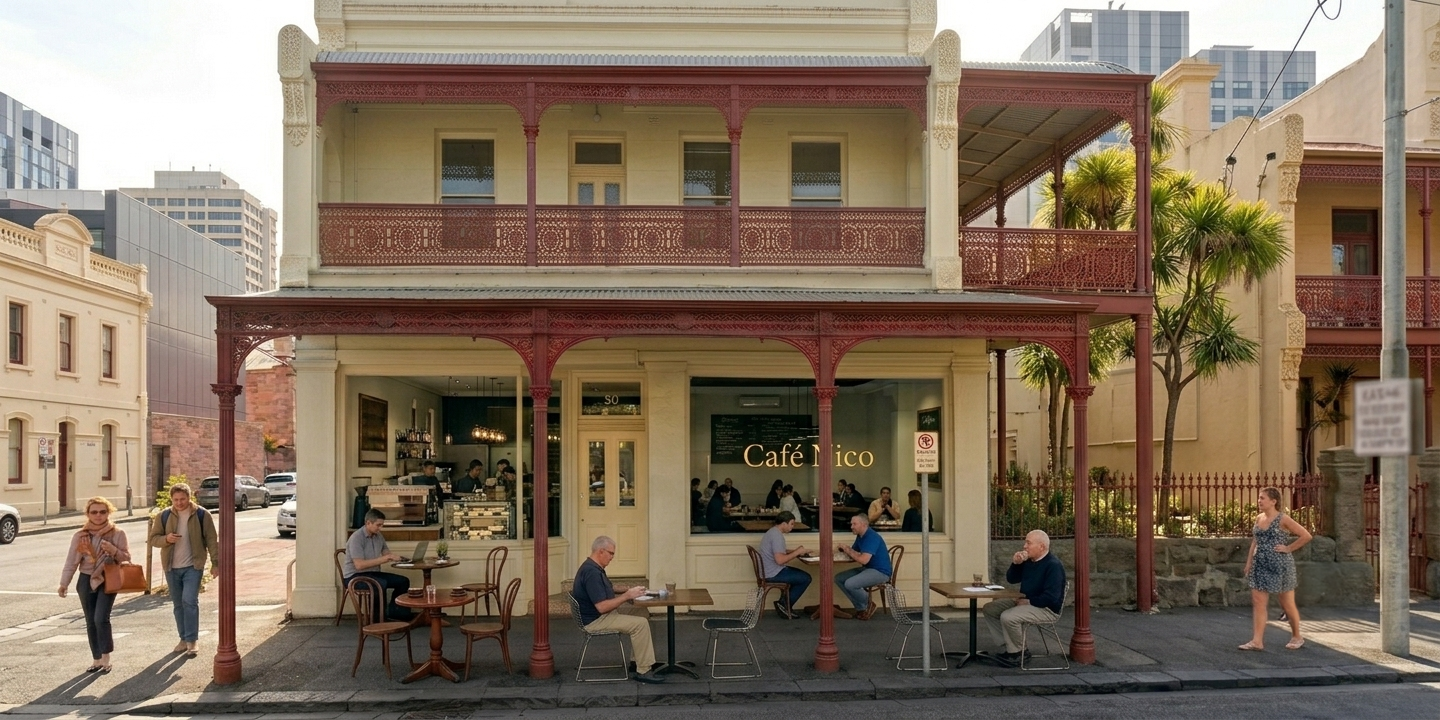
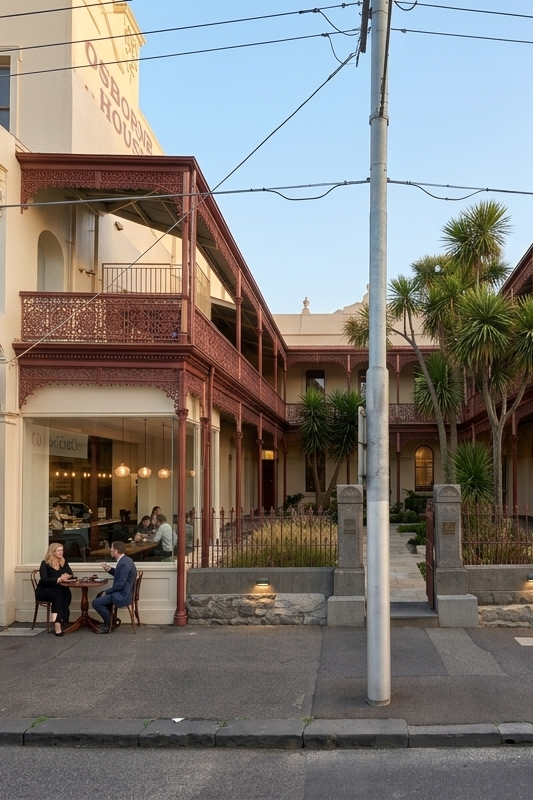
One of the most significant moments of this project is the removal of later twentieth century additions from the Nicholson Street facade, revealing the original architecture beneath and restoring the building closer to its former glory. For anyone who has walked past Osbourne House for years, this will be a remarkable transformation.
No Stone Unturned
We went to extraordinary lengths to understand this building before touching it. We interviewed the architect who worked on it for two decades, visited archives, and commissioned detailed LiDAR scanning of the entire site, creating an interactive 3D model that captured every corner of the existing conditions and became an invaluable tool throughout the project.
Osbourne House is currently under way and we couldn't be more excited about where it is heading. We look forward to sharing more very soon.